Data Centers
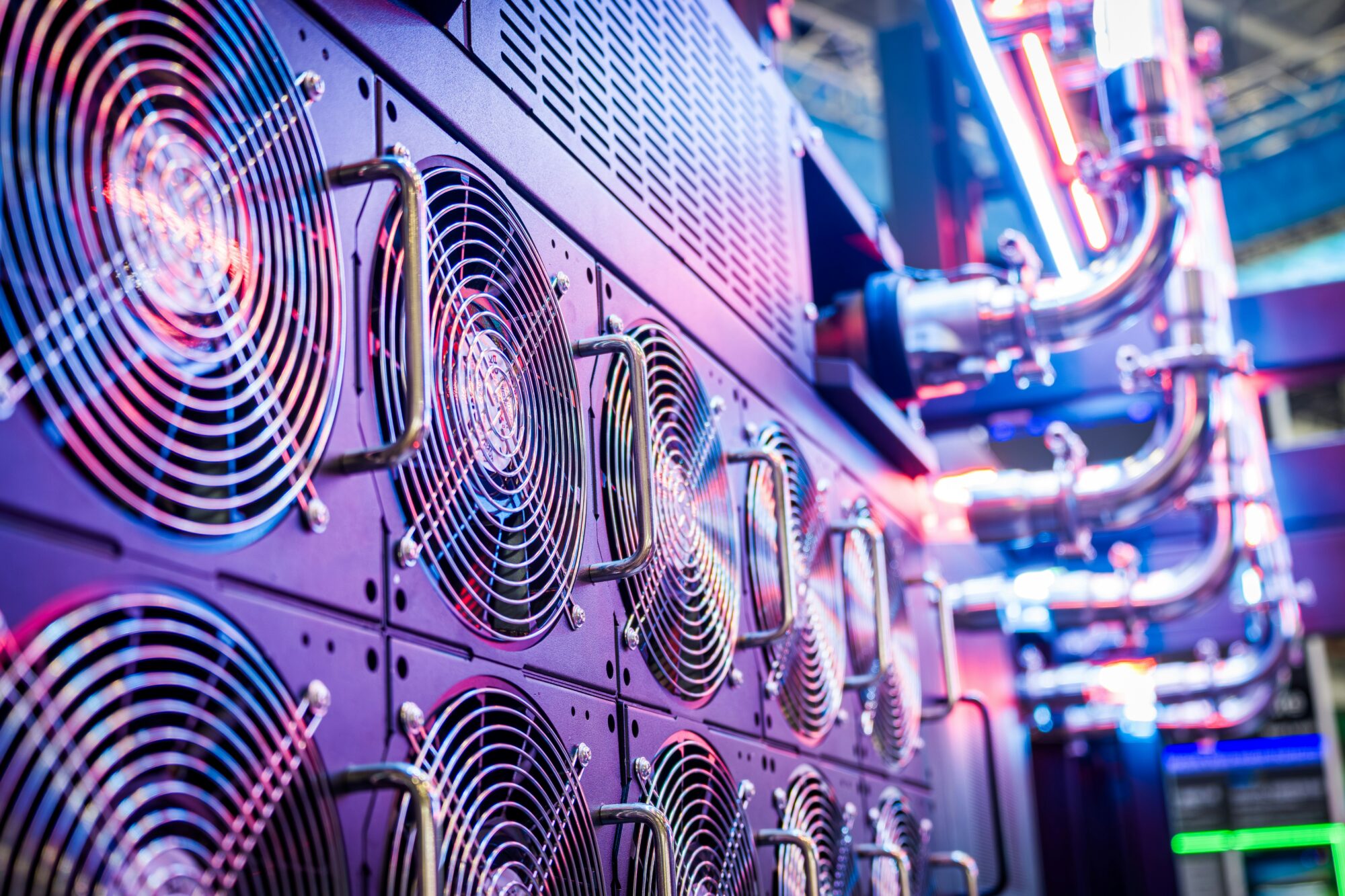
Hyperscale data centers are large facilities supporting AI, cloud computing, and data storage, with thousands of servers running 24/7 and high energy use. Montana lacks comprehensive statewide regulations for data center development, raising concerns about impacts on electricity, water, air quality, and public health.
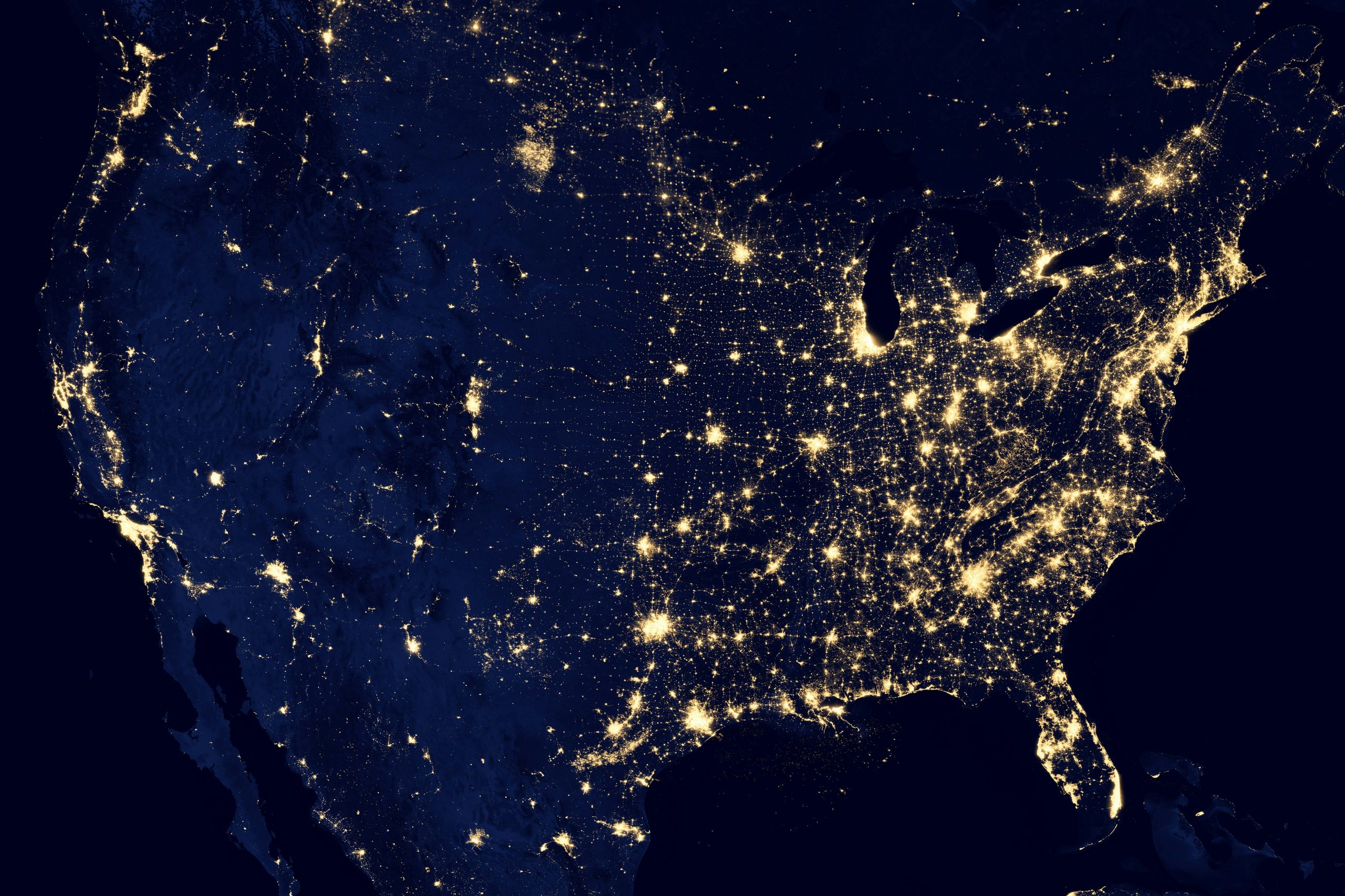
Data centers require large quantities of electricity and, depending on their cooling systems, water to operate. The proposed Quantica data center near Broadview, Montana, illustrates the potential scale of that demand. The project has sought power capacity that could eventually reach several times NorthWestern Energy’s current Montana load
- Increase emissions
- More pressure on natural water systems for hydroelectricity
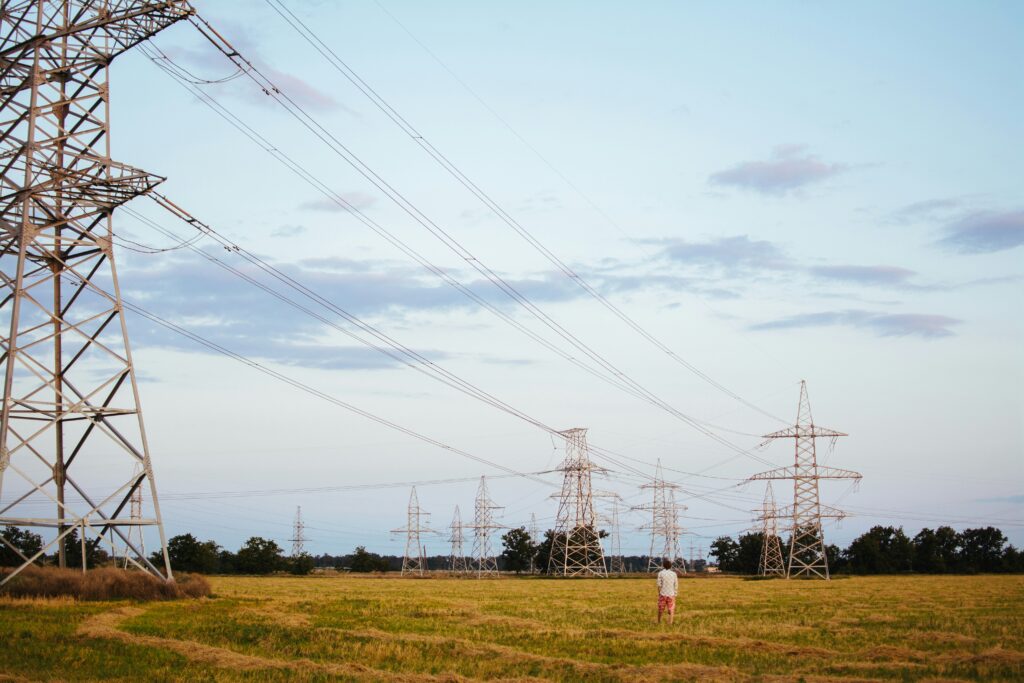
- Challenges on Montana’s power grid
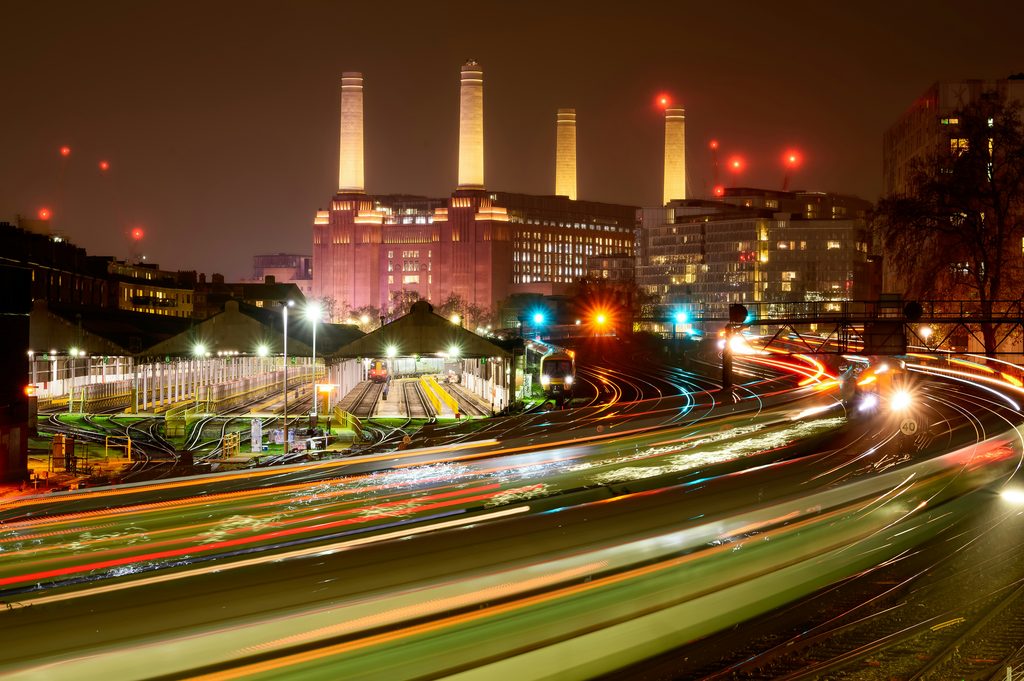
Regular exposure to 70 dB(A) or higher harms hearing. Lighting rules vary by local ordinances and zoning codes. Light pollution impacts human health, migrating birds, and pollinators’ reproductive cycles.
- Most data centers emit between 50 and 98 adjusted decibels (dB(A))
- A normal conversation is around 60 dB(A) and screaming in someone’s ear is around 98 dB(A)
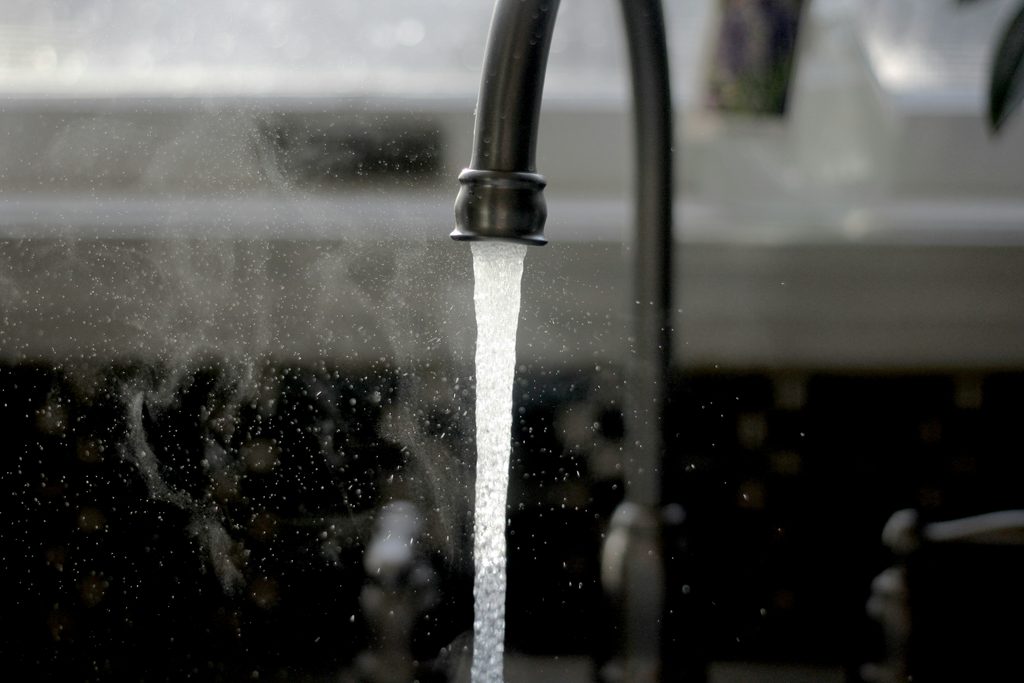
Water use is another concern. Hyperscale facilities using evaporative cooling can consume approximately 1 to 5 million gallons of water per day 一 equivalent to a town of 5-10 million people (Alliance for the Great Lakes). The Broadview proposal, using a closed loop system proposes to use 20,000 gallons a day, drawing from deep aquifers, after the construction period; this is in an arid region where that amount is significant. The amount of water and electricity a particular data center uses depends on factors including its size, computing equipment, cooling system, climate, and source of electricity.
- According to recent updates from the U.S. Drought Monitor, over half of the state is under active drought designations

Data center growth is also raising concerns about electricity affordability.
A Bloomberg analysis found that wholesale electricity prices at some locations near significant data center activity were as much as 267% higher than five years earlier (Saul et al.). This does not mean residential electricity bills increased by 267%, but the finding illustrates growing concerns about how rapidly expanding electricity demand can affect energy markets.
Some analyses project that residential electricity rates could increase 15% to 40% by 2030 without policies that prevent infrastructure costs associated with data centers from being shifted to existing customers (Muro and You).
Serving extremely large electricity users may require utilities to build new generation, transmission, and distribution infrastructure. Researchers have warned that traditional utility rate structures can allow some of those costs to be passed on to existing ratepayers (Martin and Peskoe).
In Montana, NorthWestern Energy has proposed a Large New Load Tariff intended to require data centers and other extremely large electricity users to pay for the infrastructure and service costs associated with their demand rather than shifting those costs to existing customers (NorthWestern Energy).
- Customers currently cover 25% of data center energy costs.

U.S. data centers consumed roughly 250 TWh of electricity in 2025 and generated approximately $25 BILLION in environmental and health damages from local air pollution and greenhouse gas emissions
-Muller Z. N.(2026). Measuring the Impact of Data Centers in the United States Economy: Monetary Damage From Air Pollution and Greenhouse Gas Emissions. *National Bureau of Economic Research*. DOI: 10.388/w35100
AI data center uses 300,000 gallons of water a day, while a large hyperscale facility can consume up to 5 million gallons a day.
-Saha, U. (Program Coordinator). (2026). How Data Centers Impact Surface and Ground Waters. * University of Georgia Extension*. Temporary Publication
According to Drought.gov and the Gallatin River Task Force: Roughly 57% of Montana is under active drought conditions, with an additional 36% classified as abnormally dry.
- Drought threatens the health, safety, and welfare of communities.
- Drought increases respiratory diseases, vector diseases, and gastrointestinal diseases
- Drought increase risk of losing Montana’s agricultural economy
- Drought increases the risk of wildfires

Research has found that AI centers produce 2.5 particulate matter
-Rakholia,R., Khue Le,Q., Ho Bang Quoc, V., Simon Carbajo S,R. (2022). AI-based air quality PM2.5 forecasting models for developing countries: A case study of Ho Chi Minh City, Vietnam. *Urban Climate*Volume 46, 2022, 101315, ISSN 2212-0955.
Health effects of P.M2.5 according to the U.S. EPA:
- premature death in people with heart or lung disease
- nonfatal heart attacks
- irregular heartbeat
- aggravated asthma
- decreased lung function
- increased respiratory symptoms, such as irritation of the airways, coughing or difficulty breathing.
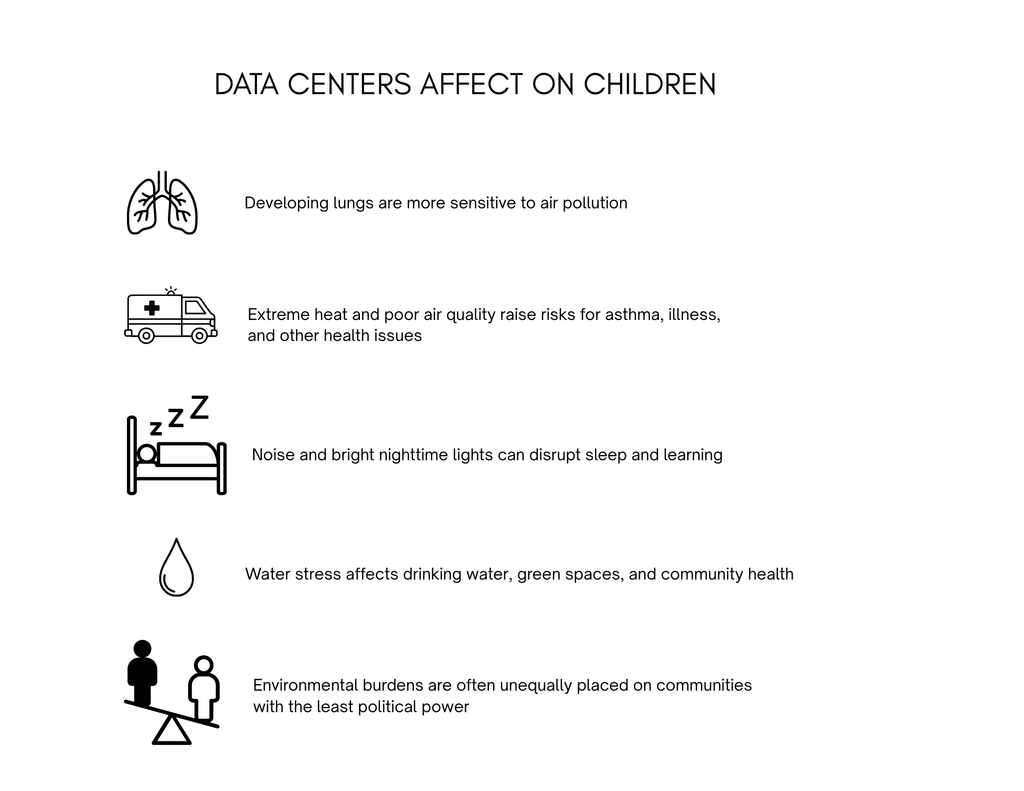
The potential health impacts of data centers extend beyond the facilities themselves.
Electricity generation used to supply data centers can produce fine particulate matter (PM2.5), nitrogen oxides (NOx), sulfur dioxide (SO2), and other forms of air pollution. Exposure to these pollutants is associated with respiratory and cardiovascular health risks (Tao and Gao).
Research examining electricity demand from U.S. data centers has also found that increased demand can contribute to PM2.5 and ozone exposure. Because electricity generation and air pollution cross community and state boundaries, health impacts can occur far from the data centers themselves (Chen et al.).
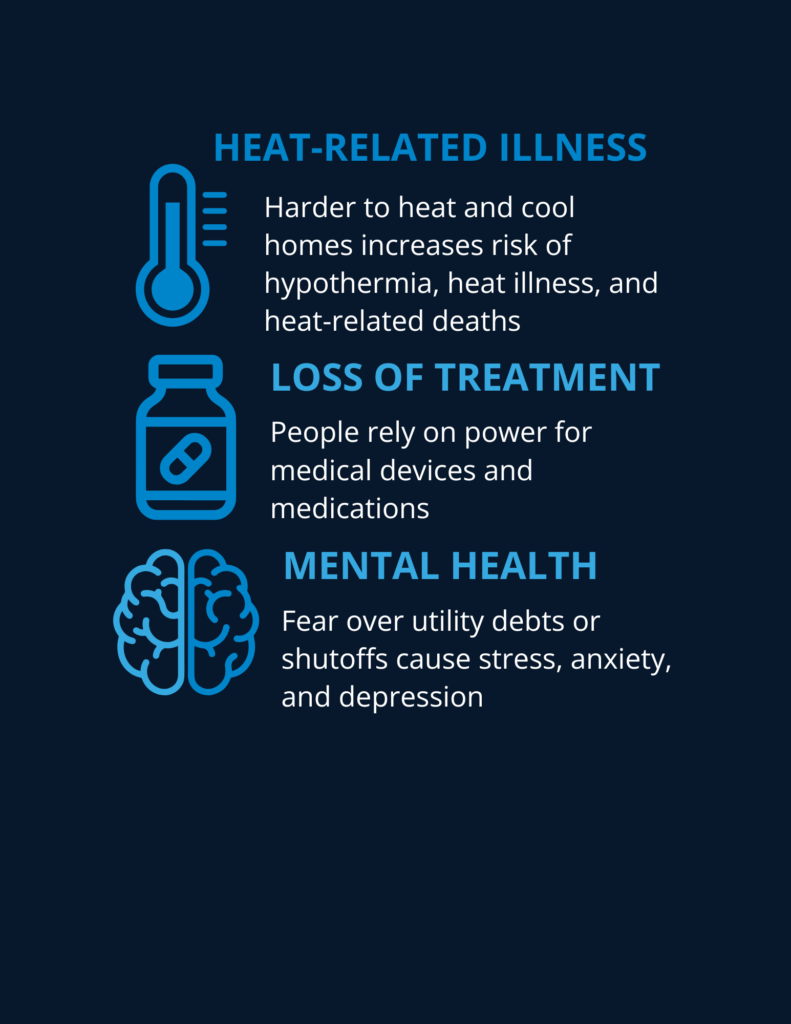
Energy affordability is also a public health issue. If rising electricity costs make it harder for households to adequately heat or cool their homes, people can become more vulnerable to extreme heat and cold. Reliable electricity is also essential for people who depend on powered medical equipment or refrigerated medications.
Works Cited
What You Can Do
- Learn about proposed projects in your community. Ask developers and local officials how much electricity and water a proposed project would require, where those resources would come from, and what safeguards would protect existing residents.
- Participate in public meetings and regulatory proceedings. Pay attention to opportunities for public comment on proposed data centers and the infrastructure needed to serve them. Utility rates and large-load tariffs may go through the Montana Public Service Commission, while local governments may consider land-use and zoning decisions.
- Ask who will pay. Large data centers can require substantial investments in power generation, transmission, and other infrastructure. Ask whether developers and large-load customers — rather than existing residential ratepayers — will be responsible for those costs.
- Ask about health impacts. Communities should have access to information about projected PM2.5, NOx and SO2 emissions, greenhouse gas emissions, water use, backup generation, and potential health impacts before projects are approved.
- Contact your elected officials. Ask local and state representatives what protections are in place to ensure data center development does not place disproportionate costs or health burdens on Montana communities
- Stay informed. Follow local data center proposals, public meetings, regulatory proceedings, and opportunities to submit public comments. Organizations including Montana Environmental Information Center also provide information about proposed data center development in Montana.
Sign Our Letter That Asks Montana Leaders to Protect Us